It seemed appropriate in these current turbulent times of regional wars around the globe that the garden club had a presentation related to warfare. However, this presentation of war was of a much more natural source with logical tactics and clear strategies.
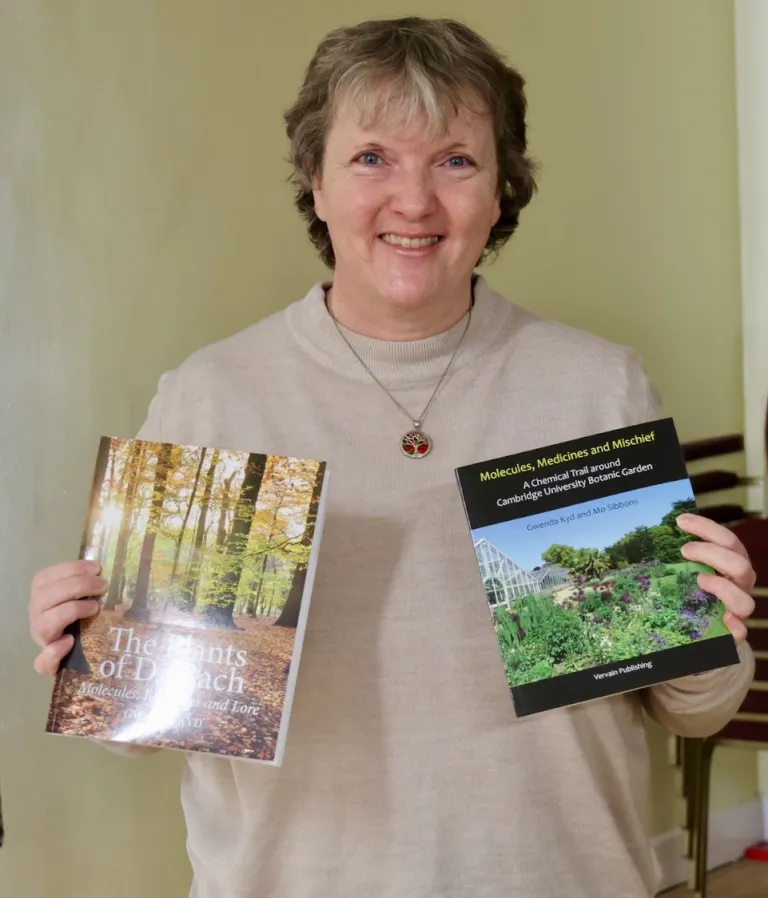
Dr Gwenda Kid, a qualified chemist turned medicinal plant expert, gave a fascinating presentation on how the plants and flowers in our garden communicate with other plants. Gwenda is a published author and co-devisor of the “Medicines from Plants” trail at Cambridge University Botanical Gardens.
While plants cannot talk, they certainly do communicate with the world around them. Plants use chemical signals to either attract pollinators or repel insects who might view them as a tasty snack. Gwenda started her presentation with some definitions in relation to the topic. The term ‘Allelopathy’ is the term used for the biological phenomenon where plants release chemicals (allelochemicals) that inhibit or influence the growth of, survival, or reproduction of surrounding plants and microorganisms. This natural “chemical warfare” allows plants to reduce competition for resources like sunlight and water. These compounds are released via root exudates, leaf leaching, or decomposition of plant residues. Thus these allelochemicals act as natural herbicides, inhibiting germination or slowing growth of neighbouring plants. Thus, there is great interest in their agricultural use as a sustainable natural herbicide alternative to synthetic agricultural chemicals. Cover crops such as rye, sorghum and brassicas are used to manage weed growth through these chemical interactions.

Junglone is a chemical exuded by the black walnut tree, which suppresses nearby plants like tomatoes and also many insects from its surroundings. Another example of these chemical interactions, that as gardeners we are very familiar with, is “companion planting” which is an organic way of maintaining a natural balance in the garden, aiding pollination and keeping pest numbers down. Good examples of this are borage and strawberries, others are garlic and carrots or sage and broccoli.
Dr Gwenda Kid, a qualified chemist turned medicinal plant expert, gave a fascinating presentation on how the plants and flowers in our garden communicate with other plants. Gwenda is a published author and co-devisor of the “Medicines from Plants” trail at Cambridge University Botanical Gardens.
While plants cannot talk, they certainly do communicate with the world around them. Plants use chemical signals to either attract pollinators or repel insects who might view them as a tasty snack. Gwenda started her presentation with some definitions in relation to the topic. The term ‘Allelopathy’ is the term used for the biological phenomenon where plants release chemicals (allelochemicals) that inhibit or influence the growth of, survival, or reproduction of surrounding plants and microorganisms. This natural “chemical warfare” allows plants to reduce competition for resources like sunlight and water. These compounds are released via root exudates, leaf leaching, or decomposition of plant residues. Thus these allelochemicals act as natural herbicides, inhibiting germination or slowing growth of neighbouring plants. Thus, there is great interest in their agricultural use as a sustainable natural herbicide alternative to synthetic agricultural chemicals. Cover crops such as rye, sorghum and brassicas are used to manage weed growth through these chemical interactions.
Junglone is a chemical exuded by the black walnut tree, which suppresses nearby plants like tomatoes and also many insects from its surroundings. Another example of these chemical interactions, that as gardeners we are very familiar with, is “companion planting” which is an organic way of maintaining a natural balance in the garden, aiding pollination and keeping pest numbers down. Good examples of this are borage and strawberries, others are garlic and carrots or sage and broccoli.