
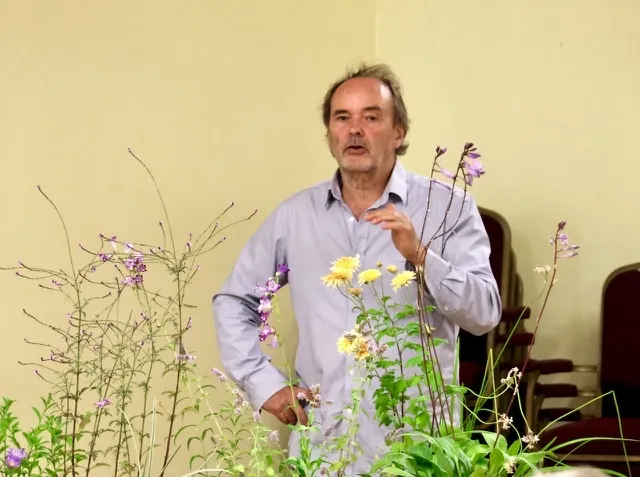
Our July meeting was an excellent presentation by Jim Paine, formerly of Walnut Tree Nursery, on the role of botanical gardens. Jim’s horticultural knowledge shone through as he gave an in-depth explanation of the history and purpose of botanical gardens and a tour of some of the world’s most prestigious public gardens.
Jim began his presentation with a history of the botanic garden, starting with the mythical hanging gardens of Babylon. The medieval psychic gardens of monasteries preceded the early European botanic gardens such as those at Padua in Italy, the oldest European botanical garden still in operation. This history included the role of plant hunters who were critical in the development of European botanical gardens such as the world renowned Kew botanical gardens, although the first botanical garden in England was established at Oxford in 1621. The establishment of botany as a separate academic discipline from medicine dramatically increased the collection and research into more exotic and rare plants, which was often based at botanic gardens.

Jim then talked about the important roles that botanic gardens play in both horticultural research into plant species, their role in conservation of endangered plants, including the role of seed banks such as the millennium seed bank at Kew’s rural site Wakehurst at Haywards Heath. Here, thousands of seeds from across the world are preserved in optimum conditions, which with the increasing risk to many plant species due to the changing climate this role of botanic gardens is critical.
JIm concluded his presentation talking about the diversity of botanical gardens based on their location in the world. This includes the botanic gardens in Tromso which specialises in artic and alpine plants, the Pheonix botanic gardens which specialises in desert plants and the world famous Kirstenbosch botanic gardens in South Africa which holds only indigenous South African species and has many ancient cycad plants. Another role of botanic gardens is housing botanical art. At Kew botanic gardens in London two of the most famous collections of botanical art are housed in the Marianne North gallery and the Shirley Sherwood gallery.
Jim began his presentation with a history of the botanic garden, starting with the mythical hanging gardens of Babylon. The medieval psychic gardens of monasteries preceded the early European botanic gardens such as those at Padua in Italy, the oldest European botanical garden still in operation. This history included the role of plant hunters who were critical in the development of European botanical gardens such as the world renowned Kew botanical gardens, although the first botanical garden in England was established at Oxford in 1621. The establishment of botany as a separate academic discipline from medicine dramatically increased the collection and research into more exotic and rare plants, which was often based at botanic gardens.
Jim then talked about the important roles that botanic gardens play in both horticultural research into plant species, their role in conservation of endangered plants, including the role of seed banks such as the millennium seed bank at Kew’s rural site Wakehurst at Haywards Heath. Here, thousands of seeds from across the world are preserved in optimum conditions, which with the increasing risk to many plant species due to the changing climate this role of botanic gardens is critical.
JIm concluded his presentation talking about the diversity of botanical gardens based on their location in the world. This includes the botanic gardens in Tromso which specialises in artic and alpine plants, the Pheonix botanic gardens which specialises in desert plants and the world famous Kirstenbosch botanic gardens in South Africa which holds only indigenous South African species and has many ancient cycad plants. Another role of botanic gardens is housing botanical art. At Kew botanic gardens in London two of the most famous collections of botanical art are housed in the Marianne North gallery and the Shirley Sherwood gallery.